How Periodontal Treatment Ventura Addresses Gum Inflammation
Gum inflammation rarely starts with drama. Most people notice a little bleeding when they brush, a mild metallic taste, or tenderness along the gumline that comes and goes. Because it is usually painless in the beginning, it is easy to dismiss. That is one reason periodontal disease advances so quietly. By the time the gums look swollen or begin to recede, the inflammation has often been active for months, sometimes years.
In practice, treating inflamed gums is less about a single procedure and more about changing the environment inside the mouth. Bacteria thrive where plaque and tartar accumulate. The immune system responds. Tissues swell. Pockets form around the teeth. Once that cycle takes hold, brushing harder at home will not reverse it. Professional care becomes necessary, not simply to clean the teeth, but to interrupt the biological process that keeps the gums irritated.
That is where Periodontal Treatment Ventura becomes important. Effective periodontal care targets the source of inflammation, measures how much damage has occurred, and creates a realistic path back to stability. The best treatment plans are not one-size-fits-all. A patient with early gingivitis needs something very different from a patient with deep periodontal pockets and bone loss. The common goal, though, remains the same: reduce bacterial load, calm the immune response, and preserve the structures that hold the teeth in place.
Why inflamed gums deserve prompt attention
Healthy gums are firm, lightly stippled, and generally do not bleed during everyday brushing or flossing. Inflamed gums behave differently. They may look puffy, appear redder than usual, feel tender, or bleed with only slight contact. Those changes reflect real tissue irritation, not just “sensitive gums.”
When inflammation lingers, the problem extends beyond the gum surface. The attachment between tooth and gum begins to weaken. Bacteria move deeper below the gumline, where oxygen levels are lower and more aggressive organisms can flourish. The body tries to fight back, but in doing so it can also contribute to breakdown of connective tissue and supporting bone. This is the turning point where simple gingivitis can develop into periodontitis.
Patients are often surprised to learn that the amount of discomfort does not necessarily match the severity of disease. Some of the worst periodontal cases are periodontal surgery Ventura not painful until they are advanced. A patient may chew normally, go to work every day, and feel mostly fine, yet still have chronic infection around multiple teeth. That disconnect is one reason routine periodontal evaluation matters so much.
What gum inflammation looks like in the exam chair
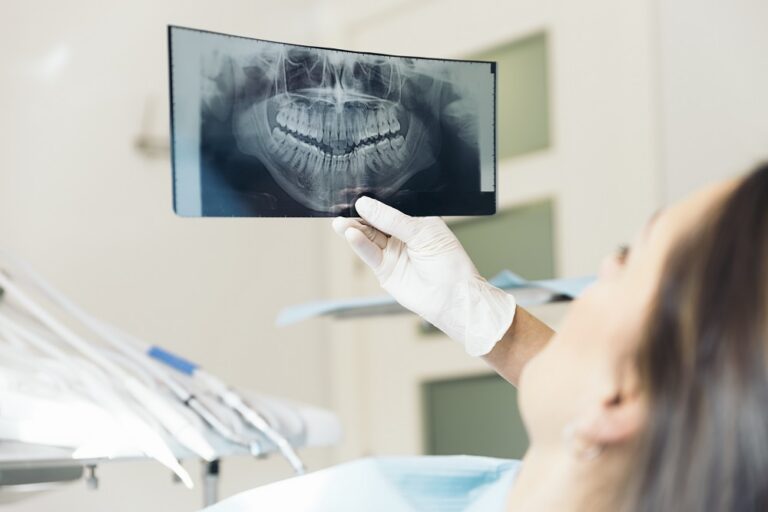
A proper periodontal evaluation is more detailed than a standard glance at the gums. A clinician looks for visible signs such as redness, swelling, bleeding points, plaque buildup, tartar deposits, recession, and areas where food packs easily. X-rays help reveal bone levels around the teeth, because bone loss cannot be judged reliably from appearance alone. Probing measurements, taken gently around each tooth, show whether the gum has detached and formed deeper pockets.
A few findings tend to repeat from patient to patient:
- bleeding during brushing or flossing
- persistent bad breath that does not improve with mouthwash
- gums that look puffy, shiny, or darker red than usual
- gum recession or teeth that appear longer
- tenderness when chewing, flossing, or cleaning near the gumline
Not every patient has all of these signs. Some have heavy tartar and very little pain. Others have obvious swelling but minimal tartar because the issue is concentrated around a few hard-to-clean areas. Crowded lower front teeth, old dental work with rough margins, dry mouth, smoking history, and inconsistent maintenance can all change how inflammation presents.
That variability matters because good periodontal treatment depends on accurate diagnosis. If a patient is treated as though they simply need a routine cleaning, when they actually have active periodontal pockets, the inflammation usually returns quickly. The surface may look cleaner for a few weeks, but the disease process keeps moving below the gums.
The difference between a routine cleaning and periodontal treatment
This distinction causes confusion for many patients. A regular prophylactic cleaning is intended for a mouth that is generally healthy, or at least stable, with no significant active periodontal destruction. It removes everyday buildup above the gumline and in shallow areas where normal home care can maintain health.
Periodontal treatment is different. It is used when there is inflammation, deeper buildup, and a clinical pattern that shows disease rather than simple maintenance needs. The goal is not cosmetic polish. The goal is infection control.
When gum inflammation is active, hardened deposits under the gums act like a persistent irritant. Bacteria adhere to these rough surfaces, and the gums cannot reattach well while those deposits remain. Trying to manage that condition with ordinary cleaning is a bit like wiping the outside of a wound while leaving debris inside it. The tissue may look slightly better for a short period, but it cannot heal predictably.
For that reason, Periodontal Treatment Ventura usually begins with a more intensive non-surgical phase, often involving scaling and root planing, sometimes called deep cleaning. This is not a marketing phrase. It is a distinct clinical service with a different purpose and different level of instrumentation.
How deep cleaning reduces inflammation
Scaling removes plaque, tartar, and bacterial toxins from the tooth surface, especially below the gumline. Root planing smooths rough root surfaces so the gums have a better chance to settle down and reattach. In many cases, local anesthetic is used to keep the patient comfortable while those deeper areas are treated thoroughly.
The effect of this treatment is both mechanical and biological. Mechanically, it removes material that harbors bacteria. Biologically, it lowers the bacterial burden enough that the immune system no longer has to stay in constant overdrive. Once that happens, swelling begins to subside, bleeding decreases, and pocket depths may shrink as the tissue tightens.
Patients often ask how quickly they should expect improvement. Mild to moderate inflammation can begin to calm within days, especially if home care improves immediately after treatment. More advanced cases take longer, and progress is measured over several weeks. A re-evaluation is typically needed to see which areas responded and which did not. That follow-up is not an administrative formality. It is where the clinician decides whether the disease is now stable or whether additional therapy is still necessary.
Some patients feel dramatic relief after deep cleaning. Their gums stop bleeding, chewing becomes more comfortable, and their breath improves. Others improve only partially because anatomy, smoking, uncontrolled diabetes, clenching, or long-standing deep pockets continue to complicate healing. Those patients are not failures. They simply need treatment matched to the biology of their case.
Where local factors make inflammation worse
Not all gum inflammation is caused by neglect. Home care matters, certainly, but several local factors can make even a conscientious patient vulnerable.
Dental crowns or fillings with overhanging edges can trap plaque in ways a toothbrush cannot reach. Crowded teeth create tight spaces where floss shreds or cannot pass cleanly. Mouth breathing can dry out the gum margins, especially in the front of the mouth, making tissue more reactive. Orthodontic retainers and partial dentures may collect plaque if not cleaned meticulously. Wisdom teeth that are partly erupted often inflame the surrounding tissue repeatedly, particularly when the area is hard to reach.
There is also the simple reality of aging dental work. A restoration placed years ago may no longer fit the gum contour as well as it once did. Patients sometimes think their brushing technique suddenly became worse, when in fact the anatomy around a tooth has changed enough to create a plaque trap. Good periodontal care includes identifying and correcting those contributing factors whenever possible. Without that step, inflammation tends to return to the same sites.
The role of bacteria, and why home care alone may not be enough
The mouth contains a complex bacterial ecosystem. Many bacteria are harmless under balanced conditions. Trouble begins when biofilm matures and shifts toward species associated with gum disease. Once the biofilm thickens under the gums and tartar mineralizes, a toothbrush cannot disrupt it effectively. Even motivated patients who brush twice daily and floss every night can still have subgingival deposits that need professional removal.
That point can be surprisingly reassuring for patients. It reframes periodontal treatment as a clinical necessity rather than a punishment for imperfect brushing. Of course, daily plaque control remains essential, but it works best after professional treatment has reset the environment. If inflammation is severe, asking home care alone to fix it is unrealistic.
A common pattern in the office goes like this: a patient notices bleeding, brushes more aggressively, the gums become more irritated, and the patient assumes they should back off because the tissue is “too sensitive.” In reality, the issue is usually not that the patient is cleaning too well. It is that inflamed tissue bleeds because disease is present. Professional assessment clarifies whether the answer is technique adjustment, periodontal therapy, or both.
What patients can expect during treatment
The details vary by severity, but the overall flow of care is usually straightforward. After examination and diagnosis, treatment is planned by area, often by quadrants Periodontal Treatment Ventura of the mouth. Numbing is commonly used for deeper scaling so the clinician can work carefully below the gumline without rushing. Ultrasonic instruments may be combined with hand instruments to break up and remove deposits. Some offices use antimicrobial rinses or place localized medication in stubborn pockets when indicated.
A typical sequence may include:
- a full periodontal charting and radiographic review
- scaling and root planing over one or more visits
- tailored home care coaching based on the patient’s anatomy and habits
- a re-evaluation several weeks later to measure healing
- periodontal maintenance visits at shorter intervals than routine cleanings
That shorter recall interval is one of the most misunderstood parts of therapy. Patients sometimes wonder why they need maintenance every three or four months instead of every six. The answer lies in disease history. Once someone has demonstrated susceptibility to periodontitis, the bacterial ecosystem can repopulate harmful species more quickly. Frequent maintenance helps keep the inflammation from regaining momentum.
When non-surgical treatment is enough, and when it is not
Many cases of gum inflammation improve significantly with non-surgical periodontal treatment. If pocketing is moderate and the patient follows through with home care and maintenance, surgery may never be necessary. The gums become less swollen, probing depths decrease, and the condition can remain stable for years.
Still, there are limits to what deep cleaning can accomplish. Very deep pockets, complex root anatomy, furcation involvement between roots of molars, and advanced bone loss can leave areas that instruments cannot fully access without surgical exposure. In those cases, referral to a periodontist may be appropriate. Surgical treatment might involve flap procedures to gain access for cleaning, regenerative techniques in selected defects, or grafting to address recession and root sensitivity.
Good clinicians are careful not to overpromise here. Periodontal therapy can control disease and preserve teeth impressively well, but not every tooth can or should be saved at all costs. Sometimes extraction and replacement become the more predictable choice, especially if a tooth has severe mobility, vertical root fracture, or near-total support loss. Clinical judgment matters. So does honest discussion about longevity, cost, and comfort.
Systemic health and healing response
Gums do not exist in isolation from the rest of the body. Smoking is one of the strongest modifiers of periodontal healing. Smokers often show less visible bleeding, which can make disease seem milder than it is, yet they tend to heal less favorably and relapse more often. Diabetes, especially when poorly controlled, can intensify inflammation and slow recovery. Certain medications reduce saliva or cause gum overgrowth. Hormonal changes may also alter tissue response.
This is where periodontal treatment becomes more than a cleaning issue. The provider has to think like a diagnostician. A patient whose inflammation seems disproportionate to the visible plaque may need questions about smoking, blood sugar control, medication changes, mouth dryness, or stress-related clenching. Those factors do not replace mechanical treatment, but they shape prognosis and aftercare.
Patients appreciate this level of attention because it explains why two people with similar-looking buildup may heal very differently. Biology is not identical from one mouth to another. Periodontal Treatment Ventura works best when treatment planning accounts for those real-life variables rather than pretending every case follows the same script.
The maintenance phase is where long-term success is won
Initial treatment gets most of the attention because it is more intensive, but maintenance is what protects the result. After inflammation drops, the mouth enters a monitoring phase. Pockets are checked, bleeding points are noted, tartar is removed before it becomes extensive, and home care techniques are adjusted as needed.
This phase has practical nuance. A patient with arthritis may need modified flossing tools or interdental brushes. A patient with implants and crowns may need a different cleaning strategy than someone with natural teeth only. A person who travels constantly for work may need a simpler routine that is realistic on the road. In periodontal care, the ideal plan is not always the most elaborate one. It is the one the patient can actually sustain.
One pattern that experienced clinicians see often is the “false recovery.” The patient feels better after treatment, bleeding stops, and motivation fades. Six or nine months pass instead of the recommended maintenance interval. By then, the inflammation may be back in the same areas, sometimes deeper than before. Periodontal disease is manageable, but it is not something you cure once and forget. That ongoing vigilance is part of preserving teeth over the long term.
Why timing matters more than many people realize
Early treatment is almost always simpler, less invasive, and more cost-effective than delayed treatment. Gingivitis can often be reversed before attachment loss occurs. Once bone is lost, however, the body does not naturally rebuild all of it just because the infection has been cleaned out. Stabilization is still valuable, often critically so, but the therapeutic goal shifts from reversal to preservation.
This matters for younger adults in particular. A person in their thirties with chronic gum inflammation may think tooth loss is a distant concern. Yet periodontal destruction is cumulative. Small amounts of untreated loss, repeated over years, become a major structural problem later. By contrast, someone who receives appropriate care early and sticks to maintenance often keeps their natural teeth comfortably for decades.
There is also a quality-of-life argument that goes beyond tooth survival. Healthy gums are simply easier to live with. They do not bleed into the sink. They do not throb after flossing. They do not contribute as much to chronic bad breath or food trapping. Patients frequently report that once their gums become healthy again, they had forgotten how normal a clean mouth could feel.
Choosing care with realistic expectations
Patients looking for periodontal therapy should expect specificity. A useful treatment discussion includes pocket measurements, radiographic findings, a description of where inflammation is concentrated, and a rationale for the recommended approach. Vague language such as “you just need a better cleaning” is not enough when true periodontal disease is present.
It is also reasonable to ask what success will look like in your case. For one patient, success may mean eliminating generalized bleeding and returning to a maintenance schedule. For another, it may mean stabilizing a few compromised molars long enough to avoid more extensive work for several years. Dentistry is full of ideal outcomes, but real practice is often about choosing the most predictable, durable improvement with the least unnecessary intervention.
In that sense, Periodontal Treatment Ventura is valuable not because it promises perfection, but because it addresses the core driver of gum inflammation with methods that are measurable and clinically grounded. When diagnosis is accurate, treatment is thorough, and maintenance is consistent, inflamed gums can become healthier, quieter, and far more stable than many patients expect.
What better gum health looks like after treatment
The changes after successful periodontal care are often subtle but meaningful. The gums look less swollen and more defined around the teeth. Bleeding decreases or stops. Breath improves. Sensitivity may lessen once inflamed tissue settles, though some patients notice temporary cold sensitivity if swelling had previously masked exposed root surfaces. Pockets that were once deep may become shallower and easier to keep clean. Follow-up probing becomes less eventful, which is exactly what you want.
There is also a behavioral shift that tends to happen when treatment goes well. Patients stop brushing with fear. They become more confident about flossing because it no longer produces a sink full of blood. They understand which areas need extra attention, and they recognize when something feels off early enough to address it.
That is the real value of periodontal therapy. It turns a chronic inflammatory problem into a managed condition with clear markers of stability. Not every case is simple. Not every tooth has the same prognosis. But with thoughtful diagnosis, skilled debridement, and consistent maintenance, gum inflammation can be brought under control, and the mouth becomes healthier in ways that are both visible and long-lasting.
Avra Dental
Address: 1708 S Victoria Ave B, Ventura, CA 93003
Phone number: (805) 941-1001
FAQ About Periodontal Treatment Ventura
Can a dentist get rid of periodontal disease?
A dentist or gum specialist (periodontist) cannot fully cure or reverse advanced periodontal disease (periodontitis), but they can successfully stop its progression and manage the infection.
Is periodontitis very serious?
Yes, periodontitis is a very serious, advanced form of gum disease that destroys the bone and tissues supporting your teeth.
How is stage 2 periodontal disease treated?
Stage 2 periodontal disease (early to moderate periodontitis) is primarily treated with non-surgical deep cleaning procedures like scaling and root planing to remove bacteria and tartar below the gumline.